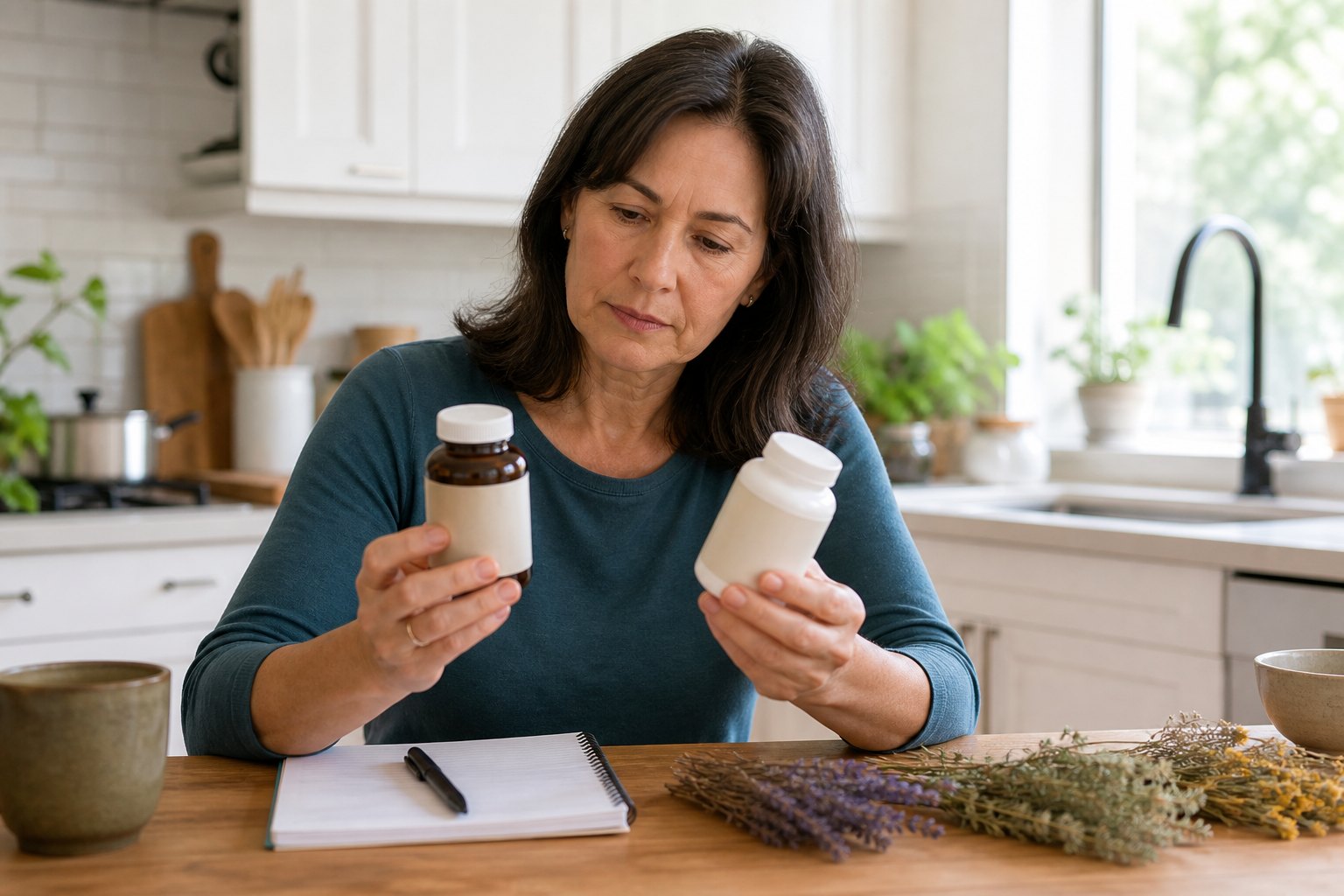
The front of a supplement package is designed to persuade. This guide keeps your attention on the information that determines whether products can be compared at all. Use it before buying, and bring the completed notes to a pharmacist or qualified professional if interactions are a concern.
How to use this guide
Write one specific goal
Name the outcome you want to evaluate. “General wellness” is too vague to tell whether a product was useful.
Record the botanical identity
Copy the genus, species and plant part. Root, leaf, flower, bark and seed are not interchangeable details.
Calculate the real daily amount
Note milligrams per serving, servings per day and how many capsules, drops or patches are required.
Decode the extract
Record extract ratios and standardized constituents exactly as listed. Do not assume a larger ratio automatically means a better product.
Expose proprietary blends
If individual amounts are hidden inside one total blend, mark the product as difficult to compare.
Read every “other ingredient”
Check capsule materials, sweeteners, colors, oils, adhesives and allergens—not only the featured botanicals.
Screen interactions and duplication
Compare the label with medications, teas, multivitamins and other supplements already in use.
Check traceability
Look for a lot number, expiration date, manufacturer contact details and credible independent testing information.
Your plan
Comparison column A
Write the exact label facts for the first product. Do not copy claims from the front panel.
Comparison column B
Record the same facts for the second product in the same units.
Evidence check
Ask whether research used the same species, extract and dose—not merely the same common plant name.
Decision rule
Prefer transparency over a longer ingredient list. If a basic amount or identity is missing, treat that as meaningful information.
Printable checklist
- Goal defined
- Genus and species listed
- Plant part identified
- Daily dose calculated
- Extract type recorded
- Proprietary blend flagged
- Other ingredients reviewed
- Medication interaction checked
- Lot and manufacturer details present
Safety boundary
Botanicals can affect sedation, bleeding, blood pressure, blood sugar and medication metabolism. Pregnancy, surgery, liver or kidney conditions and prescription use are reasons to ask a qualified professional before trying a product.